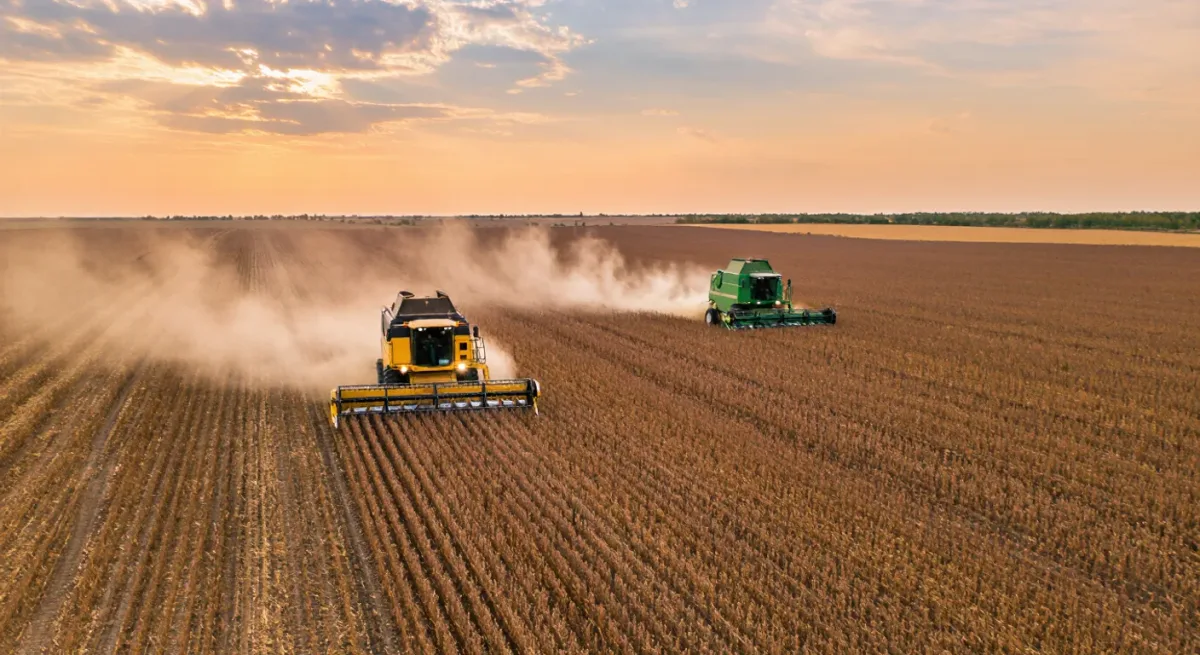
Brazil became the soybean superpower by doing three things at continental scale: opening tropical agriculture to a temperate crop, building the logistics to move it, and selling it to China. The country now produces on the order of 170 million tonnes a year — rivaling or exceeding the United States, with exports of which China buys the large majority — making the soy complex the engine of Brazil's trade surplus and the organizing fact of its farm belt (CONAB crop data; MAPA export statistics). One bean ties Brazilian Matopiba soils to Chinese pig herds; the details below explain the machine and its bill.
The agronomic revolution
Soy was once a crop of temperate latitudes; Brazilian researchers at Embrapa — the public agricultural-research corporation — bred tropical-adapted varieties and solved the acidic cerrado soils with lime, in the process converting a savanna biome the textbooks had called unfarmable into one of the world's great grain regions. The second revolution was cropping systems: safrinha (little harvest) second-cropping of maize or cotton after the soy, doubling output per hectare-year, and no-till systems that protected the soil the intensification would otherwise have burned through. The result is growth the USDA's long-term models keep having to revise upward: Brazil passed the United States in soybean output in the mid-2020s and holds the largest exportable surplus on earth.
- Core states: Paraná and Rio Grande do Sul (traditional south), Mato Grosso (the powerhouse), plus the Matopiba frontier (Maranhão, Tocantins, Piauí, Bahia).
- Buyer: China takes the large majority of soybean exports — roughly seven in ten tonnes.
- Logistics: the northern arc — ports at Santarém, Itaqui, eventually terminals on the Madeira — shortened the freight that once ran everything through Santos.
The China axis
The trade war of 2018 was Brazil's windfall: Chinese tariffs on US soy redirected demand south, Brazilian crushers and traders built the relationships, and the pandemic years locked them in. The dependency runs both ways — China needs Brazilian beans for its livestock complex as much as Brazil needs Chinese demand — but the asymmetry of alternatives favors Brazil: other sellers cannot cover Chinese imports alone. This is why every US-China trade episode is watched as closely in Rondonópolis as in Chicago, and why Chinese companies have invested directly in Brazilian crushing, railways and terminals.
| Indicator | Level |
|---|---|
| Annual soybean output | ~170 million tonnes |
| China's share of bean exports | ~70% |
| Largest producing state | Mato Grosso |
| Research backbone | Embrapa tropical varieties |
The environmental ledger
Soy's direct deforestation footprint in the Amazon is the sector's genuine success story: the 2006 Amazon Soy Moratorium — under which traders agreed not to buy beans from newly deforested Amazon land — cut soy's role in that biome's clearing to near zero, verified annually by satellite. The displacement problem is the honest asterisk: pasture displaced by soy pushes the frontier into the Cerrado, the savanna biome where no equivalent moratorium binds and where conversion continues. The sector's next credibility test is a Cerrado solution — a conversion-free supply chain the major traders have committed to in principle and not yet in practice. Agriculture's share of Brazil's emissions profile makes this the file on which the country's climate diplomacy stands or falls.
What to watch
Prices and basis at Paranaguá and Santos; China's hog cycle and crushing margins; the freight arithmetic of rail concessions like Ferrogrão's contested route; and the annual PRODES and MapBiomas clearing data, which will render the verdict on the Cerrado commitments. The long arc, though, is set: Brazilian agriculture added a tropical hemisphere to the world's grain supply in one generation, and the world now eats from it daily. The question is no longer whether Brazil can grow — it is what remains standing where it grew.
The freight revolution that made it possible
Brazilian soy's rise is as much a logistics story as an agronomic one. For decades the harvest moved south and east — truck to Santos or Paranaguá — until the northern arc changed the map: the port of Santarém on the Amazon, terminal capacity at Itaqui in São Luís, barge corridors up the Madeira from Porto Velho, and the BR-163 highway's paving that finally connected Mato Grosso's heartland northward. The share of grain flowing through northern ports has climbed steadily from a minor fraction toward parity with the southern complex, cutting days and dollars from the freight bill of the world's largest soy state — margin that, at the farm gate, decides whether frontier land clears for one more crop. Every logistics bottleneck on the northern arc is thus an environmental variable, a coupling the sector's critics and its engineers both acknowledge.
The unfinished projects are the sector's political economy in miniature. The Ferrogrão railway — a proposed track paralleling BR-163 through Pará — would industrialize the corridor's economics, and its contested route overlaps protected forest and Indigenous territories: the project sits at the exact intersection of agricultural efficiency and conservation law that defines Brazil's commodity debate, litigated and lobbied with the intensity of a constitutional matter. The lesson the freight arc teaches is double-edged: Brazil can build its way to lower costs, and every kilometer of that construction negotiates the Amazon's boundary. The soy superpower's next decade is being decided as much in environmental courtrooms as in commodity markets.
For the other commodity whose price Brazil sets for the world, read our feature on the coffee price shock, and explore the Brazil section.