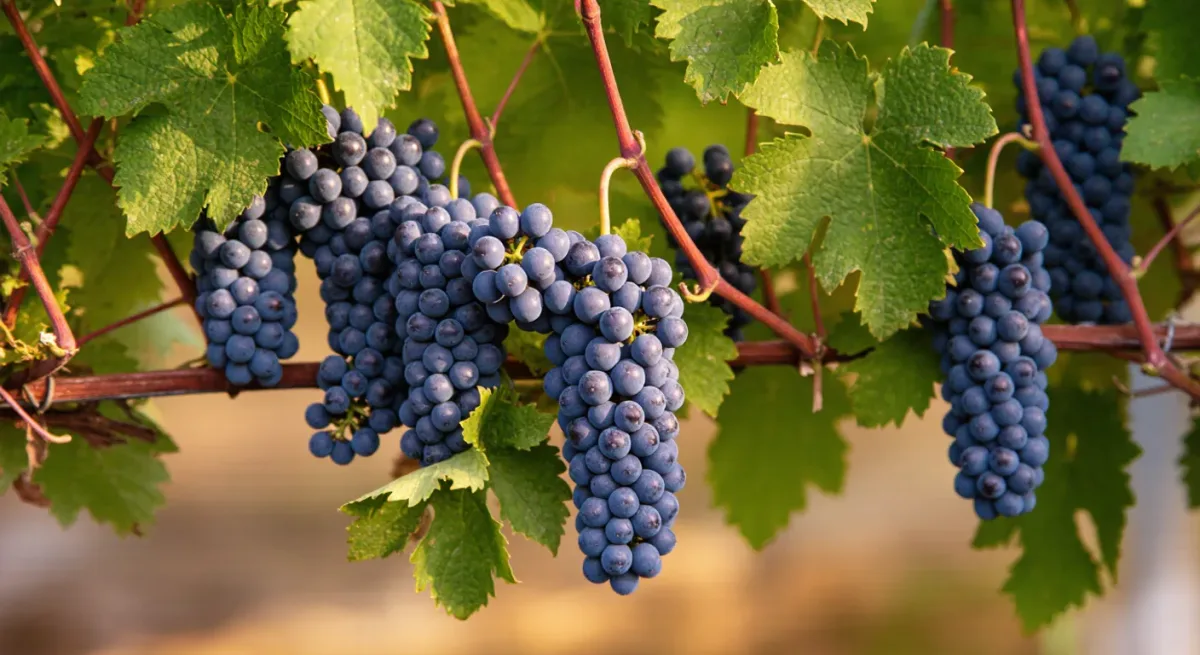
In November 1994, a visiting French ampelographer, Jean-Michel Boursiquot, walked a Chilean Merlot vineyard, studied the leaves and delivered the oenological equivalent of a paternity result: these vines were not Merlot at all. They were Carménère, Bordeaux's lost variety — presumed all but extinct in France after phylloxera and the frosts of the nineteenth and twentieth centuries — growing unrecognized in Chilean soil for roughly a century and a half. The industry's response converted an embarrassment into a denomination: today Chile is the world's dominant Carménère producer and sells the grape as its signature red.
How a French grape went native by accident
Carménère arrived in Chile with the wave of French vine cuttings imported in the nineteenth century, before phylloxera devastated European vineyards. In Bordeaux, where it had been one of the six permitted red varieties, it ripened late and unevenly and was largely abandoned; replanting turned to Merlot and Cabernet. In Chile's warmer, drier Central Valley the immigrant thrived, and because its young leaves resemble Merlot's, growers filed it under the familiar name and farmed it accordingly. The tell was in the details — Carménère's late ripening, its pink-tinted young leaves, its difficulty setting fruit — which Chilean viticulture misread as Merlot behaving oddly in Chilean conditions.
What the discovery was worth
Commercially, the correction gave Chile something no competitor could copy: a de facto monopoly on a Bordeaux variety. Wineries re-grafted, re-labeled and rebuilt marketing around 'Chile's heritage grape,' with plantings concentrated in Colchagua, Rapel and Maipo. Carménère became the flagship of the premium push that Chile needed as it climbed out of the cheap-and-cheerful reputation its volume exports had earned. The variety's agronomy also dictates its economics: it ripens weeks later than Merlot and demands patient management of green pyrazine flavors, so good Carménère costs more to grow than the Merlot it impersonated — and, positioned correctly, sells for more than the Merlot it replaced (Wines of Chile; industry data).
| Fact | Detail |
|---|---|
| Identification | November 1994, by Jean-Michel Boursiquot |
| Origin | Bordeaux red variety, pre-phylloxera French cuttings |
| Core regions | Colchagua, Rapel, Maipo valleys |
| Chile's position | Dominant world producer |
The wider lesson in Chilean wine
The Carménère story frames the strategic question of Chilean wine: what does a hemisphere-spanning exporter sell when every New World country has the same French varieties and the same technology? Chile's answers have been altitude (coastal ranges and Andean foothills), desert extremes (Elqui, Limarí), and heritage — the ungrafted old vines and this one variety that history accidentally reserved for it. Natural barriers — the Atacama to the north, the Andes to the east, the Pacific to the west, deserts to the south — kept phylloxera out, which is why those nineteenth-century vines still grow on their own roots, a living archive no European region possesses at scale.
What to taste and expect
Well-made Carménère sits between Merlot's plushness and Cabernet's structure: dark fruit, spice, and when picked right, no vegetal edge. Food pairing follows its homeland — it was historically Bordeaux's blending partner, and it behaves like one at the Chilean table with grilled beef and spice-driven dishes. Vintage timing matters less than producer discipline; the variety punishes early picking, and the best houses treat it as a late-harvest program. Prices remain, by fine-wine standards, an argument for the region: this is still a signature variety that underprices its European analogues.
Why the story keeps getting told
Every wine country has an origin myth; Chile's has the advantage of being verifiable, dated and botanically specific — a variety hiding in the wrong row for six generations, found by a Frenchman who noticed the leaves. It is also a standing commercial metaphor: the difference between competing on sameness and competing on the one thing nobody else has. Twenty-five years of Carménère branding later, the grape earns its keep not as a curiosity but as proof that Chile's vineyard history is an asset with a balance sheet.
The geography the discovery monetized
Carménère's second act coincided with — and accelerated — a broader remapping of Chilean wine. In the 2000s the industry formalized an east-west denomination overlay that divided the valleys longitudinally: Costa for the coastal zones cooled by Pacific fog, Entre Cordilleras for the historic center, and Andes for the foothill plantings that cool sharply at night. For Carménère the overlay was commercially clarifying — the variety ripens so late that coastal zones can leave it underripe while the warmer Rapel and Colchagua floors let it finish — and the better producers began labeling by zone the way the Old World labels by village. Chile had spent decades selling cheap varietal volume; the altitude-and-distance grammar let it sell place instead, at the premium tiers Carménère was invented to justify.
The grape also gave Chilean winemaking its signature technical discipline. Because green pyrazine flavors persist if Carménère is picked on the Merlot calendar, the variety forced a generation of agronomists and winemakers to relearn ripeness measurement — tasting by seed color and tannin texture rather than sugar alone — and the lessons transferred back to every other variety in the cellar. Foreign wine writers who tracked Chile through the 1990s describe the change as the industry's professionalization moment: the country stopped farming Merlot on a mistaken schedule and started farming a difficult grape deliberately, which is, in condensed form, the entire modern history of fine wine.
For another Andean export industry organized around a single signature crop, read our feature on Colombia's coffee families, and explore the Andes section for more.