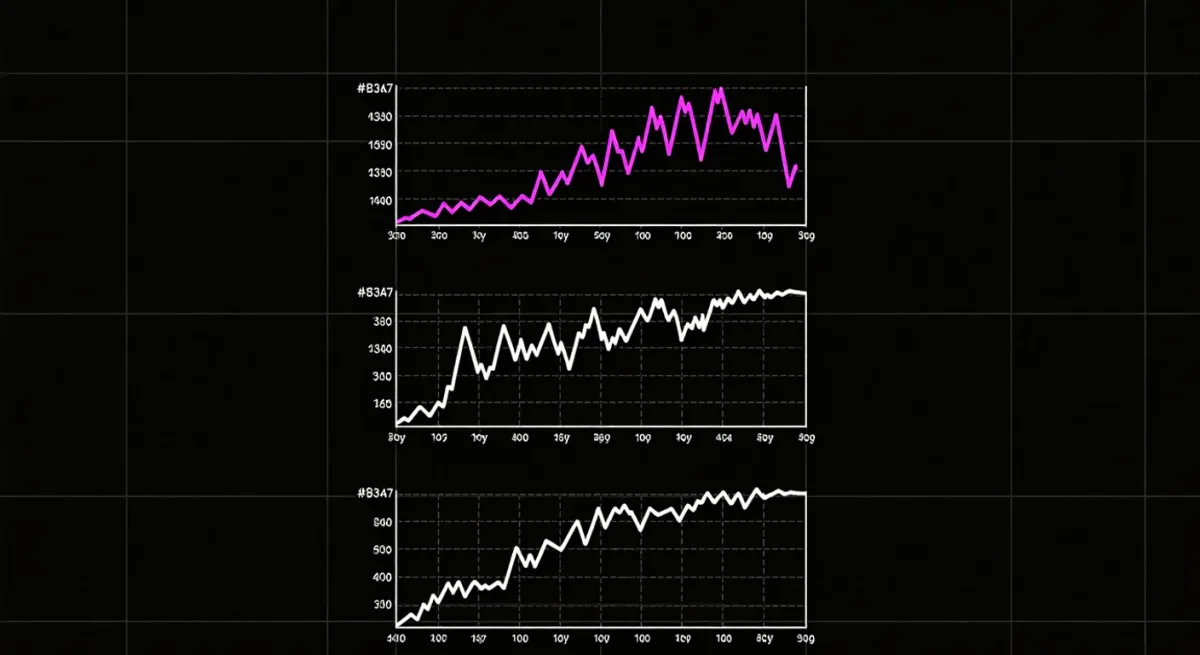
Latin America cut interest rates a full cycle before the US Federal Reserve because its central banks had hiked earlier and harder — into double digits when the Fed was still at near zero — and broke their inflation spikes before the Fed broke its own. Chile, Peru and Mexico spent 2024 and 2025 easing from their peaks; Brazil, the region's exception, re-tightened to a 15 percent cycle high against a second inflation wave and only began cutting in March 2026. Two doctrines, one region: credibility-first orthodoxies diverging over fiscal risk (central bank policy records).
The early hikers' reward
The regional timeline is the story. Starting in 2021, Brazil, Chile, Peru, Mexico and Colombia raised rates aggressively — Chile from 0.5 to 11.25 percent, Peru from a quarter point to 7.75, Mexico to 11.25 — while the Fed insisted inflation was transitory. When the Fed finally followed, Latin America's disinflation was already underway, giving the region's banks room to cut: Chile and Peru led in 2023-2024, Mexico followed steadily from early 2024 through 2025 toward 7 percent, pausing in February 2026 with inflation near 3.7. The reward for hiking early, the textbooks say, is cutting early — and the region collected it (BCCh, BCRP, Banxico policy series).
- Chile: 11.25% peak → cut from mid-2023 toward mid-single digits.
- Peru: 7.75% peak → among the region's earliest and steadiest cutters.
- Mexico: 11.25% peak → eased to 7.00%, paused February 2026.
- Brazil: cut from 13.75%, then re-hiked to 15.00% — cut to 14.75% only in March 2026.
Brazil's detour, explained
Brazil's divergence was not an accident of data but a doctrine applied twice. The 2021-2022 cycle took Selic to 13.75 percent; easing began in 2023 as inflation fell. Then came 2024's fiscal expansion, a resilient services economy and a sequence of supply shocks — and expectations, the variable Brazilian policy watches above all, came loose. The Copom re-hiked through 2024-2025 to 15 percent, the highest since 2006, and held it through five meetings until February 2026's inflation relief justified the cut to 14.75 percent. The doctrinal point: Brazil's central bank treats fiscal dominance — the risk that fiscal deficits force accommodative money — as its principal enemy, and prices that risk into rates even when headline inflation behaves (Copom statements).
| Central bank | Cycle peak | Direction by early 2026 |
|---|---|---|
| Chile | 11.25% | Cut to mid-single digits |
| Peru | 7.75% | Steady easing |
| Mexico | 11.25% | 7.00%, paused |
| Brazil | 15.00% | First cut to 14.75% |
What real rates say
The divergent paths still converge on one fact: real interest rates in Latin America remain among the world's highest — policy rates minus inflation sit well above anything in the developed world — which is the market's standing verdict on the region's risk premium and the price its currencies pay for history. The carry trade consequences are familiar to every frontier-currency desk: high real rates attract yield-seeking capital, cushioning the currencies and financing deficits, until the moment they don't. The region's monetary credibility is real and recently earned; the fiscal files that would make it permanent are, in every country, unfinished.
Why it matters for investors and neighbors
Rate divergence is the region's main asset-price engine: currencies, equity multiples and local bond curves trade the differential against the Fed, not the absolute levels. Mexico's easing path is priced against the USMCA calendar; Brazil's against its fiscal trajectory; Chile's and Peru's against their terms of trade. For the region's companies, the cost-of-capital map decides capex geography as much as any tax incentive — and for its households, the difference between a 15 percent credit card rate environment and a 7 percent one is the difference between frozen and functioning consumption.
What to watch
The Copom's pace — the region's most-watched sequence, now data-dependent meeting by meeting; Banxico's resumption decision after its February 2026 pause; the Fed's own path, which compresses or widens every carry calculation; and the fiscal news that each bank explicitly cites. Latin America ran the world's monetary experiment — hike first, cut first, and in Brazil's case, twice — and the results are now the region's most exportable institutional product.
The carry trade, concretely
For currency desks, Latin America's rate divergence is a position: borrow where rates are low, hold peso, sol, real or colon where real yields are high, and collect the spread as long as the exchange rate cooperates. The region's high real rates made it the world's premier carry destination through the tightening years, and the flows were large enough to matter for the currencies themselves — depreciation episodes routinely arriving with the unwinds. The discipline the trade teaches is asymmetry: carry earns steadily and loses violently, because the rate differential accrues daily while the devaluation arrives in an afternoon. Every veteran of 2018's Argentine peso, 2024's Mexican peso volatility or Brazil's election-cycle real knows the shape by heart.
The regional policy implication is double-edged. Attractive real rates finance current-account deficits and cushion currencies — the carry inflows are a genuine stabilization dividend for orthodox central banks. But the same flows are fair-weather capital whose exit amplifies whatever shock prompted it, which is why the region's finance ministries treat the Fed's path as a domestic variable and why the central banks that cut early and credibly — Chile and Peru — aimed, in part, to normalize rates down toward levels that attract less flighty money. The region's monetary decade ends where it began: with the exchange rate as the discipline that rate policy must respect.
For the growth forecasts these policies are steering, read our report on the IMF's July 2026 regional outlook, and explore the Latin America business section.